Serving Dracut & Tewksbury, MassachusettsEmergency: 911   •   NMRECC: 978-328-0797
About NMRECC

Our Story

A regional emergency communications center serving Dracut and Tewksbury.

Our Mission

Mission Statement

The mission of the Northern Middlesex Regional Emergency Communications Center (NMRECC) is to provide excellent and professional service to the citizens, visitors, and public safety responders of our member communities, Dracut and Tewksbury.

The Northern Middlesex Regional Emergency Communications Center staff will accomplish this mission by striving to provide high-quality emergency communication services to our member communities and their Public Safety field personnel through adherence to professional standards and ethical practices.

Northern Middlesex Regional Emergency Communications Center signage
2020Established
24/7Operations
2Member communities
4Public safety agencies
Established 2020

Our Story

The Northern Middlesex Regional Emergency Communications Center(NMRECC) is the primary Public Safety Answering Point (PSAP) for the towns of Dracut and Tewksbury. Established in 2020, NMRECC was created to consolidate emergency communications and enhance public safety through regionalized dispatch services.

Staffed by a dedicated team of 19 full-time professionals, our center includes an Executive Director, an Administrative Assistant, four Supervisors, and a team of highly trained Emergency Communications Dispatchers.

NMRECC operates 24 hours a day across three shifts: 12 a.m. to 8 a.m., 8 a.m. to 4 p.m., and 4 p.m. to 12 a.m.

Our center, located at 987 Whipple Road in Tewksbury, Massachusetts, serves as a vital link between the public and emergency services, including police, fire, and EMS responses, in the communities we support.

Governance of NMRECC is shared between our participating communities and public safety agencies. The Administrative Board includes one representative from each member community, typically the Town Manager or their designee, while the Operations Committee includes one representative from each public safety agency served by NMRECC. This structure provides both communities and the agencies we support with a voice in NMRECC’s governance and operations while promoting transparency, collaboration, and a unified approach to public safety communications.
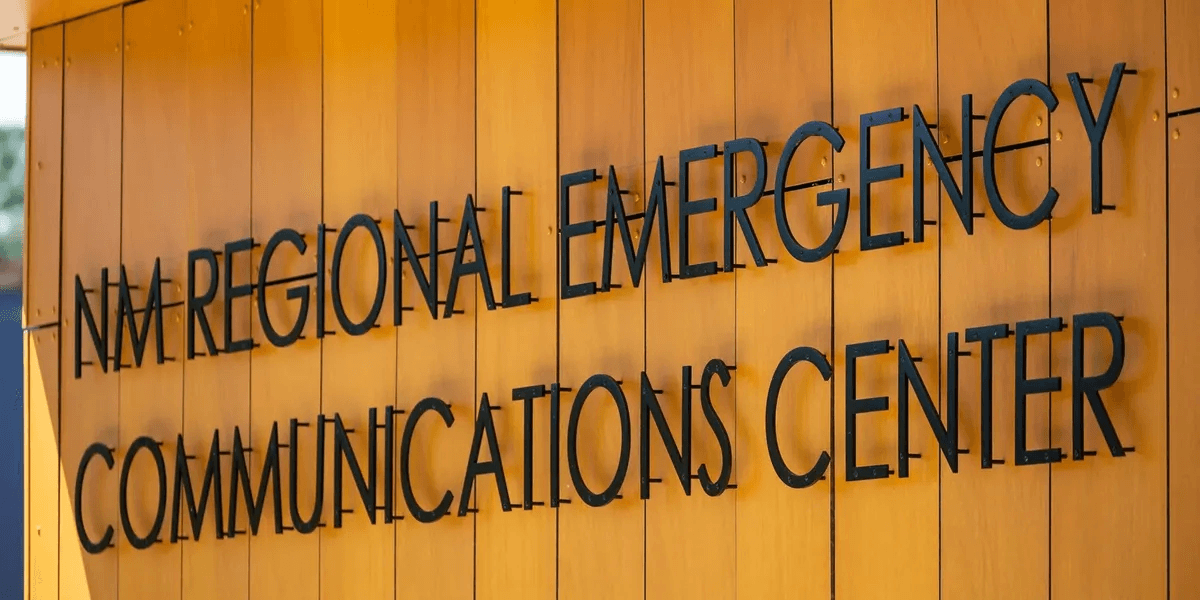
Interior of the Northern Middlesex Regional Emergency Communications Center
Technology & Innovation

Modern tools supporting emergency communications.

As a forward-thinking agency, NMRECC builds on theCommonwealth's Next Generation 911 system by leveraging modern public safety technology, including RapidSOS and Prepared 911.

These platforms enhance location accuracy, provide real-time data, and allow dispatchers to receive additional information such as live video, text translations, and AI-generated transcriptions when available.

These tools provide additional situational awareness while supporting the trained telecommunicators responsible for coordinating emergency response.

Professional Partnerships

Connected to the public safety communications profession.

NMRECC personnel participate in regional and national organizations supporting emergency communications, professional development, interoperability, and emergency response.

TERTMassachusetts Telecommunications Emergency Response Task Force
APCOAssociation of Public-Safety Communications Officials
NENANational Emergency Number Association
MCSAMassachusetts Communications Supervisors Association
Regional FAQ

Common questions about regional emergency communications

Will service quality decline if my town is in a regional?

Some believe regionalizing means slower response times and less local knowledge. However, we rely on a well-designed Computer-Aided Dispatch (CAD) system to enable our dispatchers to know exactly where a call is located and who needs to respond. Our dispatch trainees are equally and thoroughly trained on each town and agency we support.

Shared resources allow agencies to afford state-of-the-art CAD, radio, and other systems that might be cost-prohibitive for smaller, standalone centers. The towns of Dracut and Tewksbury have both benefited from MA State 911 grants that allowed for complete radio infrastructure upgrades.

Do local agencies lose control?

Many regional centers establish governance models that ensure participating agencies have a voice in operations, policies, and decision-making.

Governance of NMRECC is shared between the participating communities, with two board members representing each town. NMRECC holds bi-monthly Operations Committee meetings with the agency chiefs and NMRECC leadership.

Is regionalization only about cost savings?

While financial considerations play a role, regionalization is more about improving service delivery, resilience, interoperability, and emergency response coordination.

The dispatchers aren't in my town, so how can they know the local knowledge?

With modern mapping and data systems, dispatchers can access real-time location information, street-level details, and jurisdictional boundaries.

Local knowledge is incorporated into the training programs for dispatch staff, just as it would be for a standalone center hiring a non-resident.

Technology also allows our center to use "common names" as aliases for specific locations. That allows long-time residents to use older location names, such as the "blue store" in Tewksbury, without the dispatcher needing to be specifically trained on that name.